In the high-stakes world of LNG, a vessel’s profitability is determined by its utilization rate. Any time a ship spends waiting, circling, or sailing empty without a strategic purpose, margins are eroded. Orbify’s Idle Laden and Idle Ballast modules are designed to shine a light on these hidden costs.
1. Monitoring the "Floating Warehouse": Idle Laden Vessels
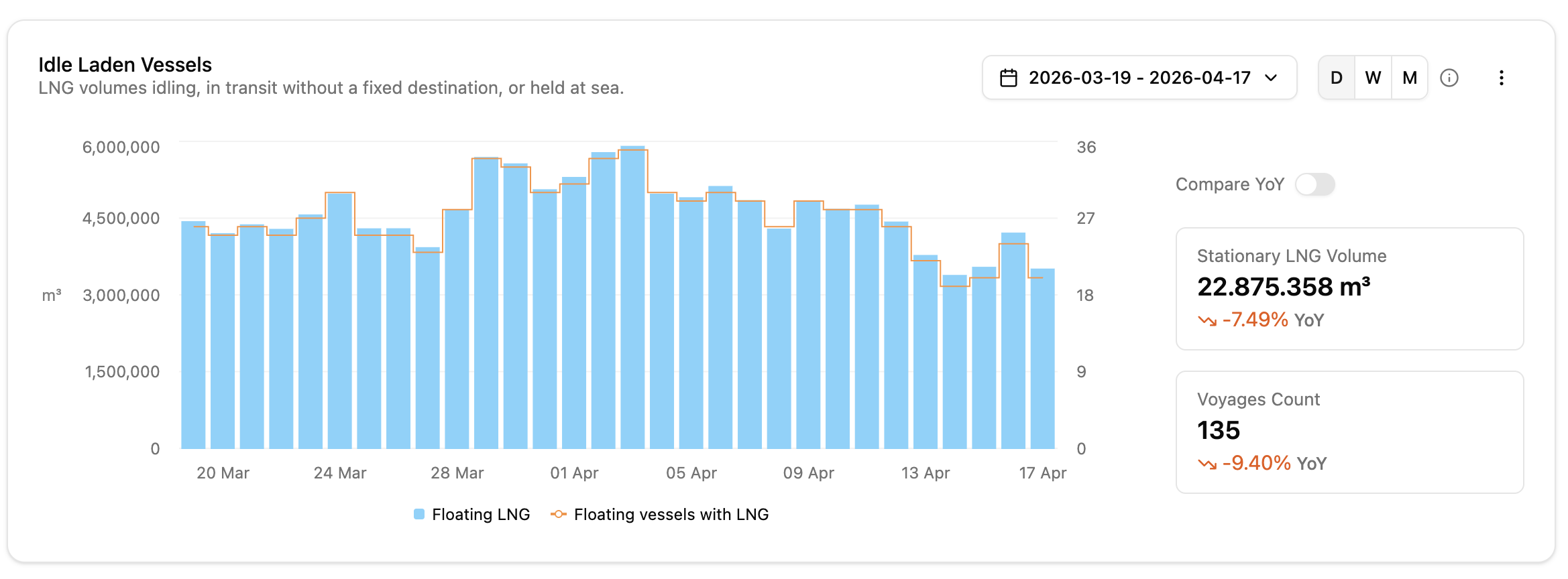
An Idle Laden Vessel is a ship carrying cargo that is not currently moving toward a fixed destination or is held at sea.
Strategic Storage vs. Inefficiency: Sometimes, "Floating LNG" is a deliberate choice (e.g., waiting for a price spike). Other times, it’s a sign of port congestion.
The Trend Indicator: As seen in the dashboard, a total of 22,875,358 m³ is currently stationary. However, the -7.49% YoY decrease suggests that the market is moving faster and vessels are spending less time idling compared to last year.
Vessel Count Correlation: By overlaying the number of vessels (the orange line) on the volume (blue bars), users can identify if the idle volume is concentrated in a few massive Q-Max ships or spread across a larger fleet of conventional vessels.
The Idle Laden Vessels module identifies blocked capital and helps operators assess port congestion or storage strategies.
2. Managing the "Empty Return": Idle Ballast Vessels
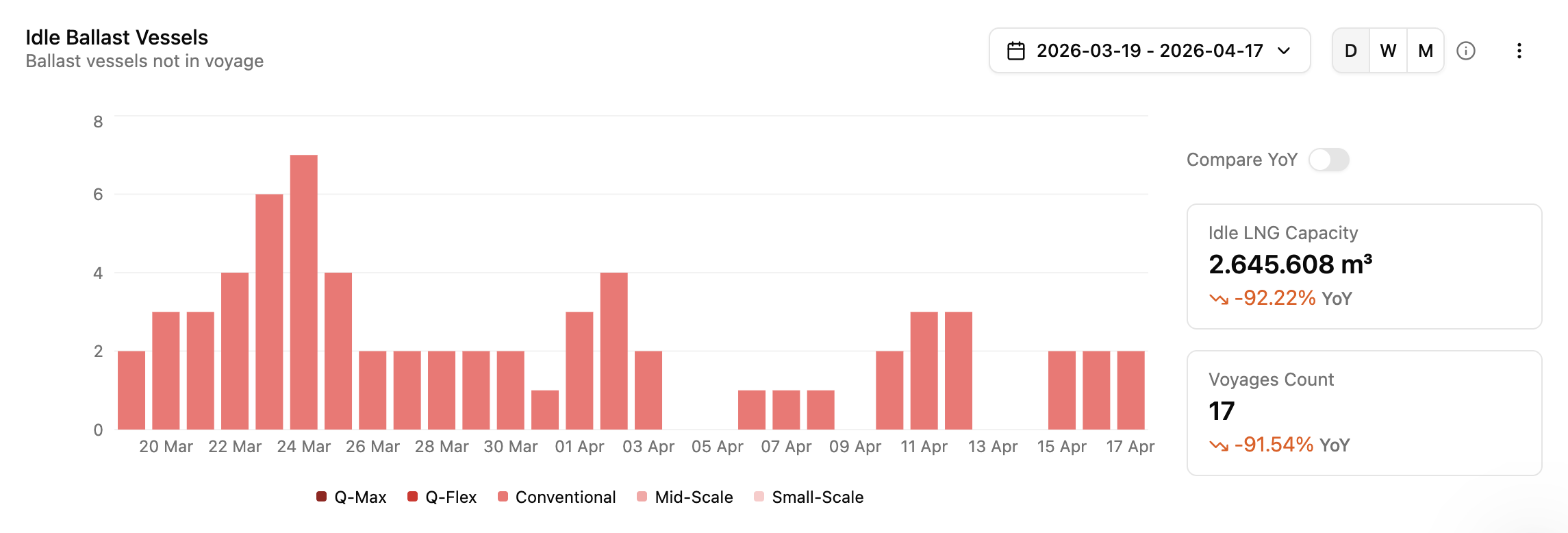
The most expensive way to sail is "in ballast" (empty). Orbify tracks Idle Ballast Vessels—ships that have unloaded their cargo and are currently stationary or unassigned.
Class-Based Segmentation: Not all ships are equal. Orbify categorizes these vessels by class (Q-Max, Q-Flex, Conventional, etc.). Seeing a cluster of Conventional vessels sitting idle (as shown in the red-shaded bars) is a signal to chartering teams that there is available capacity to be seized.
Drastic Efficiency Gains: The current data shows a staggering -92.22% YoY drop in Idle LNG Capacity. This indicates an extremely "tight" market where vessels are being re-chartered almost immediately after discharge, leaving very few ships waiting in ballast.
Tracking Ballast vessels by class allows for precise fleet re-positioning and capacity planning.
3. Real-Time Fleet Snapshots
At the top of the Orbify interface, four "Quick-Glance" counters provide the pulse of the operation:
Laden vessels in transit (237): Your active revenue generators.
Floating LNG: Your capital currently held at sea.
Laden vessels at terminals (29): Ships currently in the "last mile" of delivery.
LNG in transit (Next 13 days): Your short-term liquidity forecast.
The Bottom Line: From Dead Time to Lead Time
By integrating Idle and Ballast data, Orbify transforms the fleet manager’s role from firefighting to forecasting. Instead of asking "Why is that ship stationary?", managers use these screens to ask "Where can we send our next available ballast vessel to capture the best margin?"